What to Do After a Parent's Fall: The First Hour and the Follow-Up
Published · By Andy Gillis and Adam Williams — family caregivers, CareCoordinate founders
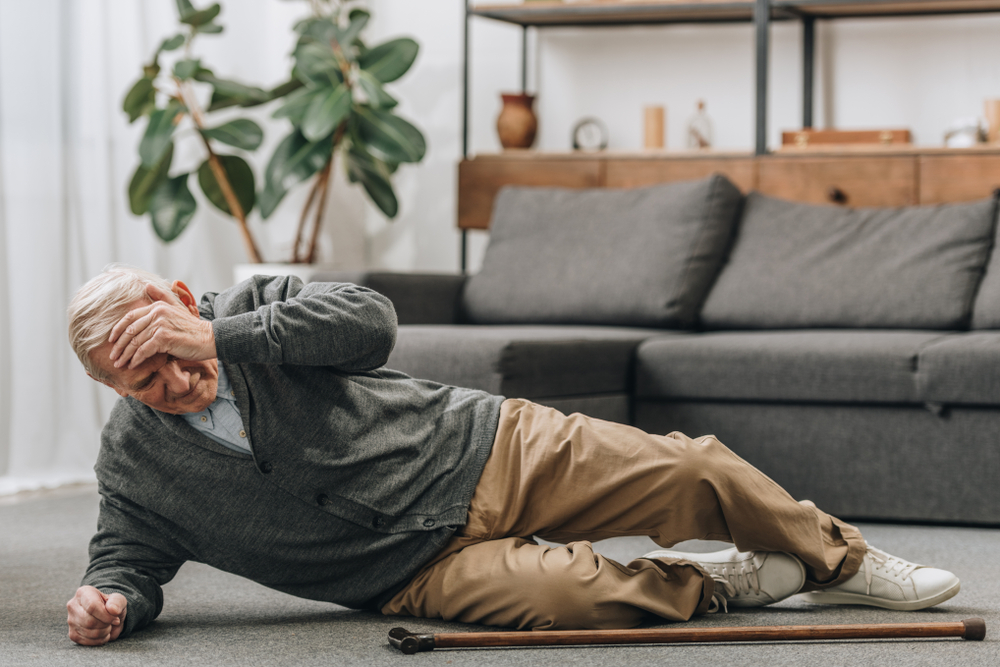
The phone call is 'Mom fell.' Sometimes it is Mom herself, calm and embarrassed on the kitchen floor; sometimes it is a neighbor. More than one in four adults over 65 falls each year, and falls send about 4.5 million older people to emergency departments annually, so most families will get this call at least once.1 What happens in the next hour, and the next month, decides whether it is a scare or the beginning of a decline.
This guide is the caregiver's side: what to do at the scene, when to call for help, how to help someone up without hurting either of you, and the follow-up — the doctor visit, the medication review, the physical therapy, the home changes — that turns a fall into a plan. Whether an injury needs treatment is a question for a clinician; if there is any doubt, that is what 911 and the emergency department are for.
The first minutes: assess before you lift
Stay calm and do not pull them up. Ask where it hurts and look: bleeding, a limb at a wrong angle, a hip or leg they cannot bear weight on, a blow to the head, confusion or drowsiness that is new, chest pain or trouble breathing. Any of those, or a fall they cannot explain, or any doubt at all: call 911, keep them still, and cover them with a blanket while you wait. A hip that is broken will not be improved by standing on it. If you are not there in person, tell your parent to stay down and stay on the phone while you call for help and for the neighbor with the key.
Helping them up safely, when it is safe
If they are not hurt and want to get up, go in stages, and let them do the work. Roll onto their side, then onto hands and knees. Crawl to a sturdy chair or the bottom stair. Hands on the seat, bring one foot forward into a half-kneel, then push up to sit on the chair — or to stand — and rest before going anywhere. If they need your help, lift with your arms by bending your legs; never lift with your back.2 If they cannot get up in stages, or the effort causes pain, stop and call for help. A pulled caregiver is a second patient.
Every fall is a medical event
Even a fall with no injury goes to the doctor, promptly. Falls are often a symptom: a new medication, low blood pressure on standing, an infection, a heart rhythm change, worsening vision, weakness, or a foot problem. A fall that involved a head strike, or a hard fall onto the back, side, or head, should be evaluated the same day. Tell the doctor exactly what happened — what your parent was doing, the time of day, whether they felt dizzy first, whether they lost consciousness, what they had eaten and taken.3 That is why the log matters: 'she fell' gets a shrug; 'she fell twice this month, both times getting up from a chair in the morning' gets an investigation.
The four-part follow-up
A fall without follow-up predicts the next fall. Ask the doctor for each of these, explicitly:
- A medication review. Sedatives, sleep aids, some blood pressure and heart medications, and drugs that cause dizziness or drowsiness raise fall risk, and the more medications a person takes, the higher the risk; the doctor or pharmacist can often stop or change something.4
- Vision and feet. An eye exam if it has been more than a year, a look at footwear, and a check for foot pain or numbness.
- Physical therapy for strength and balance. Ask for a referral; Medicare Part B covers medically necessary outpatient physical therapy when a clinician certifies it, with a 20 percent share after the deductible, and there is no annual cap.5 The therapist can also teach your parent how to get up from a fall safely.
- A home walk-through for the hazard that was involved — the loose rug, the dark hallway, the bathroom without grab bars — and the others waiting their turn.6
Fix the house while the fall is fresh
Parents who resisted grab bars for years often accept them the week after a fall. Use the moment. The CDC's Check for Safety checklist walks room by room: remove throw rugs or tape them down, add night lights on the route from bed to bathroom, install grab bars by the toilet and in the shower, bring frequently used items within reach, secure stair railings on both sides, and improve lighting.7 Our home safety checklist guide goes deeper. If your parent lives alone, this is also the week to settle the daily check-in and to consider a medical alert device — a supplement to human contact, not a replacement.
Log it and share it
Write the fall down where the whole family and the care team can see it: date and time, where, what your parent was doing, any symptoms before, injuries, medications taken that day, and what was done afterward. One fall is an event; two in a season is a pattern the doctor needs, and only a shared log will show it to the sibling who was not there. In CareCoordinate a fall goes in the shared notes and symptom timeline next to the medication list, so the whole picture reaches the appointment.
Then watch the weeks after. Fear of falling again makes many older adults move less, which weakens them and makes the next fall more likely. Encourage the therapy, the walks with company, the outings. Confidence is part of the recovery.
Assess before you lift and call 911 for pain, a head strike, confusion, or any doubt. Help them up in stages using your legs, not your back. Report every fall to the doctor, then insist on the four-part follow-up: medication review, vision and feet, physical therapy, and the home fix. Log it where the family and the care team can see it. The goal is not just recovering from this fall but preventing the next one.
Questions families ask
When should I call 911 after an elderly parent falls?
- Call 911 for pain, bleeding, a limb they cannot move or bear weight on, a blow to the head, new confusion or drowsiness, chest pain or trouble breathing, or any fall you cannot explain or they cannot get up from. When in doubt, call; a suspected hip fracture should never be walked on.
How do I help an older adult get up after a fall?
- Only if they are uninjured: roll onto their side, then onto hands and knees, crawl to a sturdy chair, place hands on the seat, bring one foot forward into a half-kneel, and push up to sit. If they need your help, lift with your arms and legs, never your back, and stop if anything hurts.
Should my parent see a doctor after a fall even if they are not hurt?
- Yes. A fall is often a symptom of something treatable — a medication effect, low blood pressure, an infection, vision or balance problems. Tell the doctor what your parent was doing, any dizziness beforehand, and what they had taken, and ask for a medication review and a physical therapy referral.
Does Medicare cover physical therapy after a fall?
- Medicare Part B covers medically necessary outpatient physical therapy when a doctor or other qualified clinician certifies the need. After the Part B deductible you pay 20 percent of the approved amount, and there is no yearly limit on medically necessary therapy.
Sources
- Facts About Older Adult Falls — Centers for Disease Control and Prevention. Accessed September 18, 2026
- Caregiver Guide: Mobility Problems — Helping Someone Up After a Fall — Health in Aging Foundation, American Geriatrics Society. Accessed September 18, 2026
- Falls and Fractures in Older Adults: Causes and Prevention — National Institute on Aging. Accessed September 18, 2026
- Tip Sheet: Preventing Falls — Health in Aging Foundation, American Geriatrics Society. Accessed September 18, 2026
- Physical Therapy Coverage — Medicare.gov. Accessed September 18, 2026
- Preventing Falls at Home: Room by Room — National Institute on Aging. Accessed September 18, 2026
- STEADI — Patient and Caregiver Resources (Check for Safety home checklist) — Centers for Disease Control and Prevention. Accessed September 18, 2026